About KLM UK Engineering

KLM UK Engineering is a renowned Maintenance, Repair, and Overhaul (MRO) provider based at Norwich International Airport. With over 40 years of experience in the aviation industry, they specialise in delivering high-quality maintenance services for a wide range of aircraft, including the Boeing 737 series and Embraer 170/190 models. As a wholly owned subsidiary of KLM, they uphold the exceptional standards and innovation synonymous with the KLM brand.

KLM UK Engineering prides itself on combining innovation with a customer-focused approach. By leveraging cutting-edge technology and maintaining a skilled, experienced team, they consistently deliver superior results at competitive prices. Their commitment to operational efficiency and regulatory compliance makes them a trusted partner for airlines and aircraft operators worldwide.

Objectives

The primary goal of the Customs Database Application was to create a centralised, efficient, and user-friendly system to manage KLM UK Engineering's customs processes. The application needed to address their specific operational challenges, streamline workflows, and ensure compliance with complex regulations.

Simplify Customs Management

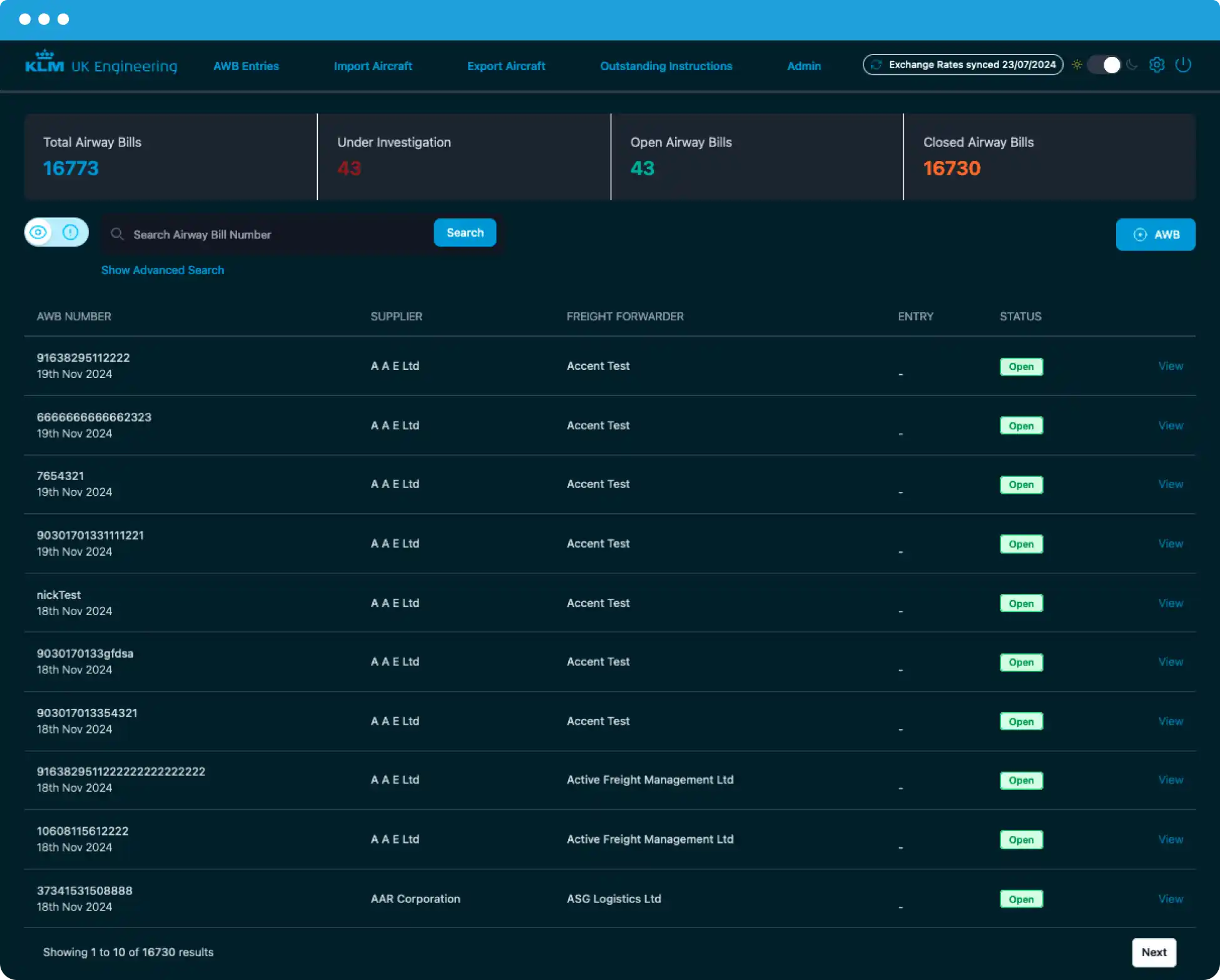
A key objective was simplifying customs management by replacing manual and paper-based processes with a digital platform, reducing errors and saving time. Automating repetitive tasks, such as documentation generation and data entry, was also crucial to enhancing operational efficiency. In addition, the application was designed to generate official customs documentation required for importers, ensuring accuracy and compliance with all relevant regulations. This included creating, storing, and sharing documents critical to managing imports and exports effectively.

Create Official Documentation

Regulatory compliance was another essential priority. The platform was built to handle customs declarations and reports in strict accordance with HMRC requirements. Built-in tools facilitated the preparation and submission of accurate reports to HMRC, reducing the risk of penalties or delays and ensuring that KLM's operations met all legal obligations. A centralised database was developed to store customs-related data to enhance data visibility and access, enabling real-time access and improved collaboration among team members. This allowed stakeholders to quickly retrieve and assess import and export statuses, facilitating faster and more informed decision-making.

Streamline Communication and Reporting

The application also aimed to streamline communication and reporting. Robust reporting features were integrated to generate actionable insights into customs activities and trends for internal analysis. Additionally, the tools simplified the preparation and exporting of official reports for HMRC, helping KLM quickly meet regulatory deadlines. Operational efficiency was further improved by eliminating workflow bottlenecks, reducing customs clearance turnaround times, and minimising downtime through an error-free process for managing imports and exports.

Design for Scalability and Adaptability

Scalability and adaptability were fundamental design principles, ensuring that the solution could grow with KLM UK Engineering, accommodating increased customs activity or evolving regulatory requirements. The modular architecture also allowed for future integration with new technologies or systems. Finally, a user-friendly interface was prioritised and tailored to the specific needs of KLM's team. Minimal training was required, making the platform easy to adopt and ensuring it was embraced by all stakeholders.

KLM Website Screenshot

Approach

Developing the Customs Database Application for KLM UK Engineering required a collaborative, agile, and tailored approach. From the outset, we understood that the project's success depended on deeply understanding KLM's unique requirements and involving their team throughout the development process. This ensured the final product would seamlessly integrate into their operations and deliver maximum value.

We began with a discovery phase, engaging with KLM's team to map out their current customs processes, identify pain points, and outline specific goals for the application. Through a series of workshops and interviews, we gathered detailed insights into their day-to-day challenges and the regulatory requirements they needed to meet. This initial phase was vital in creating a shared vision for the project and setting the foundation for the application's features and functionality.

During the design and planning stage, we worked closely with KLM to define the application's core functionalities, such as automated documentation for importers, streamlined workflows, and robust reporting tools for HMRC. Prototypes and wireframes were shared with KLM's team for feedback, ensuring the user interface was intuitive and aligned with their operational needs. Their input was invaluable in shaping a solution that was functional and practical for the end users.

Development followed an agile methodology, allowing flexibility and regular collaboration with KLM. We delivered the application in iterative phases, each focusing on implementing and refining critical features based on real-time feedback from their team. This incremental approach ensured the application met its expectations at every step and allowed adjustments to accommodate unforeseen requirements or challenges.

Testing and validation were critical stages in the development process. KLM's team was actively involved in user acceptance testing (UAT), running the application through realistic scenarios to identify any gaps or improvements needed. Their hands-on participation ensured the system performed reliably under real-world conditions and fully addressed their needs.

Communication was a cornerstone of our approach. We maintained regular updates, progress reviews, and open lines of communication with KLM throughout the project. This transparency fostered trust and alignment, ensuring the application development stayed on track and met all expectations.
Challenges

Every project has unique challenges, and developing the Customs Database Application for KLM UK Engineering was no exception. From understanding complex regulatory requirements to designing a solution tailored to KLM's needs, this project pushed us to innovate and problem-solve at every stage.

1

Understanding the Rules

One of the primary challenges was navigating the intricate and ever-changing landscape of customs regulations. Ensuring the application met HMRC's compliance standards while being flexible enough to adapt to future regulatory changes required meticulous attention to detail. We needed to embed features for generating official documentation and reports with absolute accuracy, leaving no room for error.

2

Integration

Another significant challenge was integrating the new application with KLM's existing systems and workflows. Their operations were highly specialised, and we had to ensure the application would complement their processes without causing disruption. This involved careful planning, thorough testing, and close collaboration with KLM's team to ensure a smooth transition.

3

Data Management

Data management posed another hurdle. KLM needed a centralised database to store all customs-related information, which required importing large volumes of existing data while maintaining integrity and consistency. A key technical challenge was ensuring the application could handle complex data queries and generate real-time insights without compromising performance.

4

User Interface

Designing a user-friendly interface that catered to the diverse needs of KLM's staff was also a critical consideration. The application had to be intuitive enough for quick adoption yet robust enough to handle detailed tasks like customs declarations and compliance reporting. Balancing simplicity with functionality required us to iterate extensively based on feedback from KLM's team.

5

Deadline

Finally, the tight timeline for development added an additional layer of complexity. KLM needed the application to be operational within a fixed period to meet internal and regulatory deadlines. To achieve this, we adopted an agile development approach, delivering the application in manageable phases and prioritising features critical to their immediate needs.

Results

The application significantly streamlined customs management processes, replacing manual, time-intensive tasks with automated workflows. By digitising operations, KLM achieved faster processing times for imports and exports, allowing them to meet critical deadlines while reducing administrative overhead. Team members could now focus on higher-value tasks rather than navigating complex paperwork.

HMRC Compliance

One of the standout achievements was the seamless generation of official documentation for importers and comprehensive reports for HMRC. The system ensured accuracy and compliance, giving KLM confidence in its customs operations while eliminating the risk of penalties for regulatory errors. Built-in audit trails and data logs further enhanced transparency, making it easier for the team to track and manage customs activities.

Operational efficiency

Operational efficiency was significantly boosted as the centralised database provided real-time access to customs data. This improved collaboration across departments and facilitated quicker, more informed decision-making. The advanced reporting features also gave KLM valuable insights into their operations, enabling them to further identify trends and optimise their workflows.

Friendly UI and Efficient UX

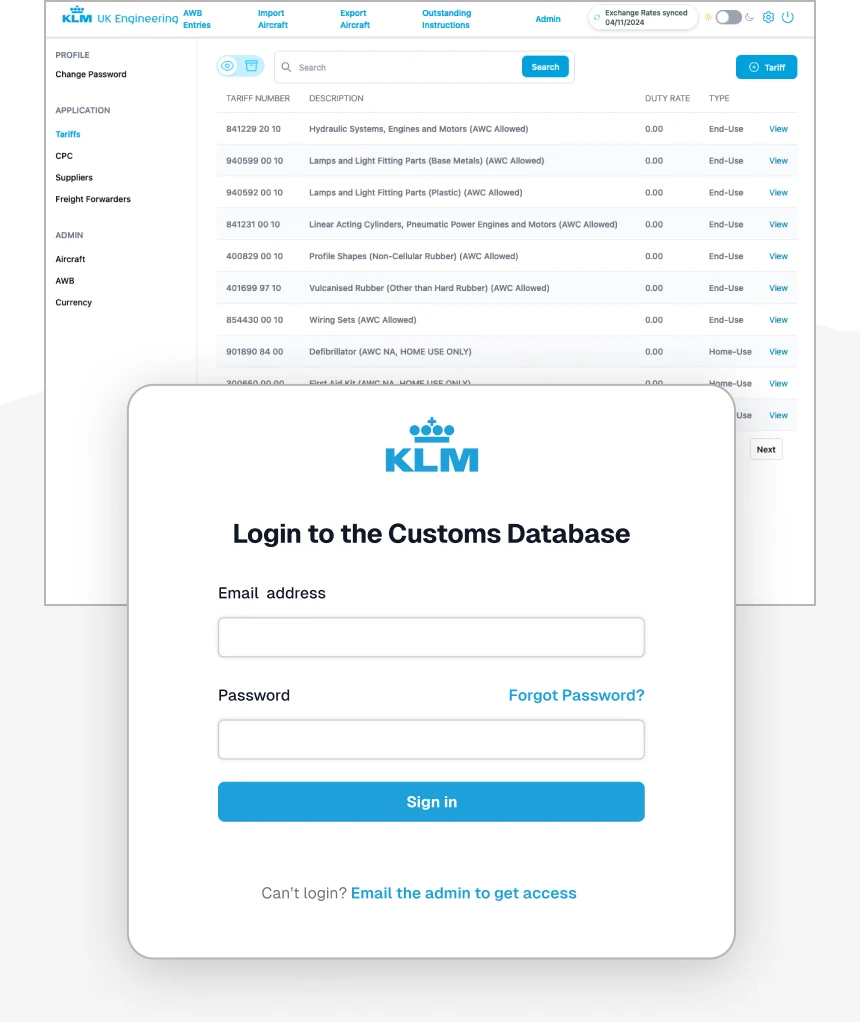
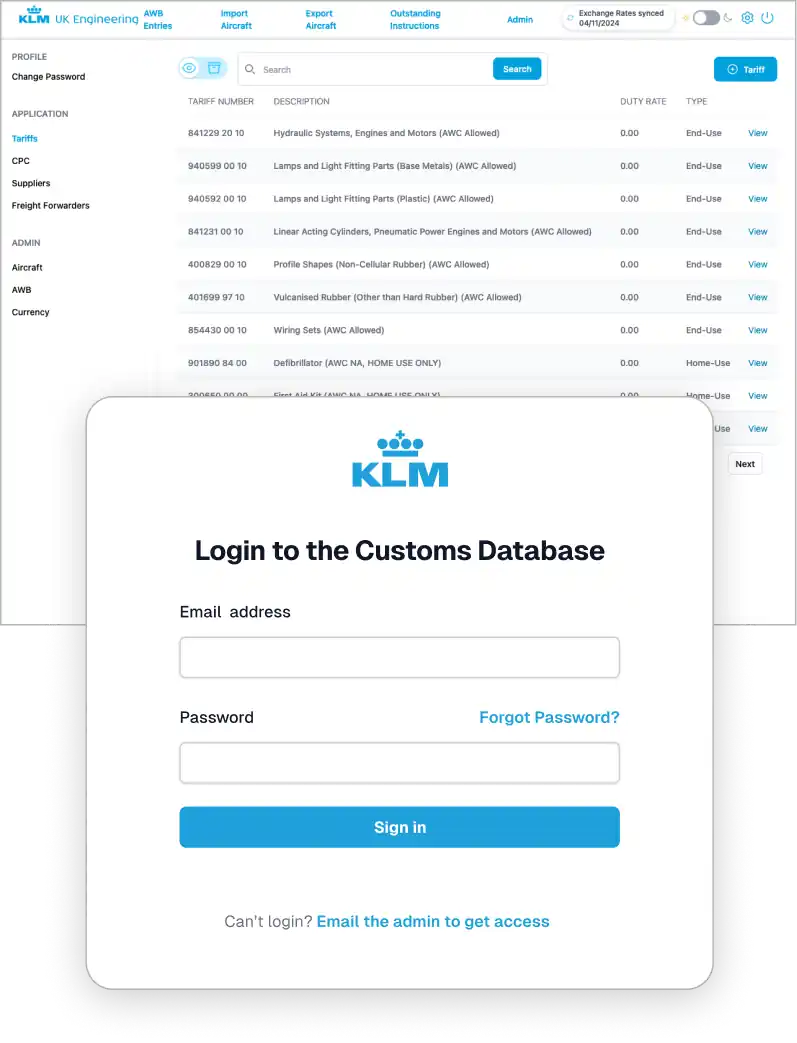
The user-friendly interface was widely praised by KLM's team, who found the system intuitive and easy to navigate. Minimal training was required, and the adoption process was smooth, with the platform quickly becoming an integral part of their daily operations. The application's scalability ensures it will continue to support KLM's growth and adapt to future regulatory changes or operational requirements.

The Customs Database Application we developed for KLM UK Engineering is more than just a tool—it's a testament to what can be achieved when expertise, collaboration, and innovative technology come together. By addressing their unique challenges, streamlining complex processes, and ensuring compliance with ever-changing regulations, we delivered a solution that empowers KLM to operate more efficiently and confidently in their industry.

At Accent, we specialise in creating bespoke digital solutions tailored to the specific needs of businesses like yours. Whether you're looking to improve operational efficiency, automate critical processes, or develop a system that aligns perfectly with your goals, our team has the expertise to make it happen. We don't just build applications; we build partnerships, working closely with you every step of the way to ensure success.

If KLM's story resonates with your business needs, imagine what we could achieve together. Let us help you turn your challenges into opportunities and deliver a solution that drives your organisation forward. Contact us today, and let's start shaping your success story.