As 2025 draws to a close, one trend has emerged as particularly defining in the world of visual communication. From digital interfaces to brand identities, designers have embraced the deliberate pairing of contrasting colours to create distinct design languages, proving that the right colour combination can speak volumes without uttering a single word. Intentional colour pairing reflects broader societal currents. The year's emphasis on introspective colours with subtle complexity represents a collective turn towards nuance and depth. We're no longer satisfied with single-note palettes; we crave the conversation that emerges when disparate hues meet. Whether through the warm accessibility of golden yellows, the passionate energy of corals, or the forward-thinking freshness of aquatic hues, colour combinations have proven themselves to be a sophisticated design language capable of communicating complex ideas instantaneously.
The Art of Chromatic Conversation
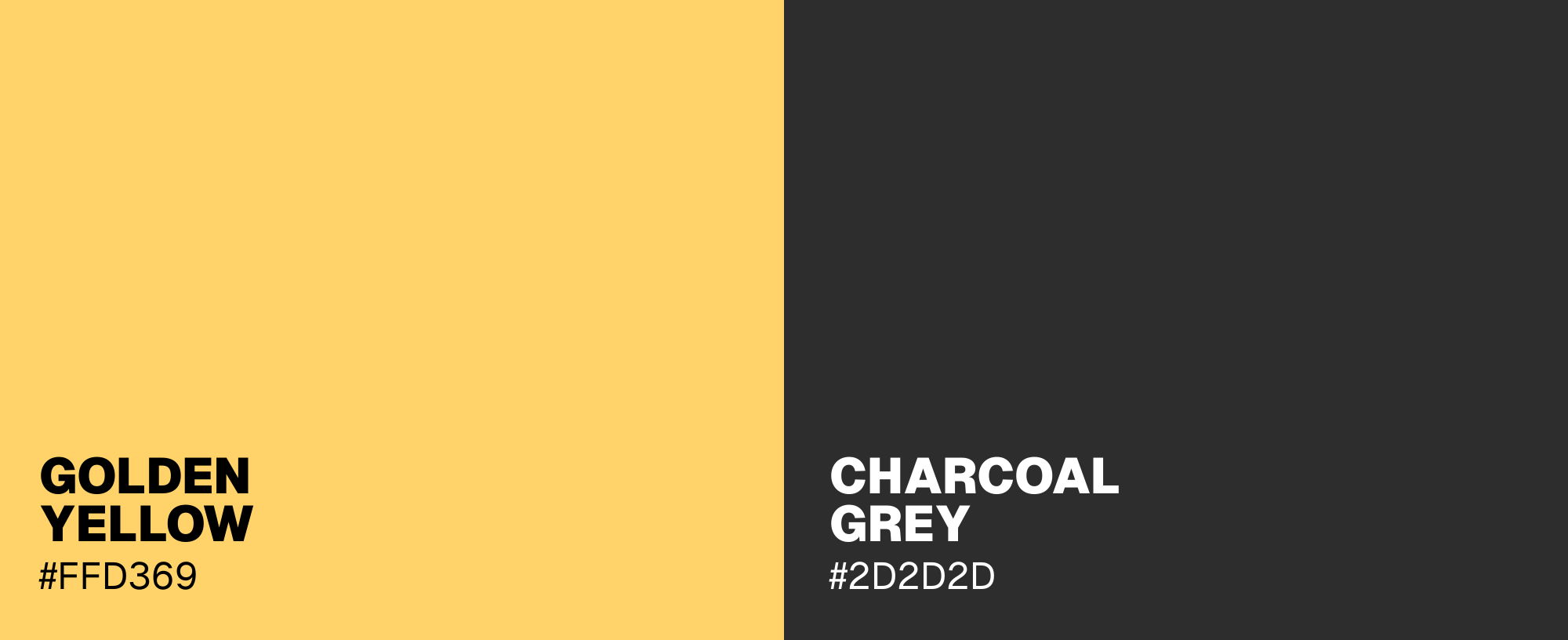
Colour pairing is more than mere aesthetics. Each combination tells a story, evokes an emotion, and establishes a visual vocabulary that audiences instinctively understand. Take, for instance, the pairing of golden yellow (#FFD369) with charcoal grey (#2D2D2D). This combination speaks of warmth tempered by sophistication. The vibrant yellow-gold radiates positivity and energy, whilst the deep charcoal provides the necessary counterweight, preventing the composition from veering into frivolity. This is design language at its most eloquent: approachable yet professional, cheerful yet serious. This year's embrace of muddied, earthy tones (like Pantone's colour of the year - Mocha Mousse) alongside bright accents reflects a collective desire for balance—a visual representation of optimism tempered by realism that has defined the cultural mood.
Vibrancy Meets Depth
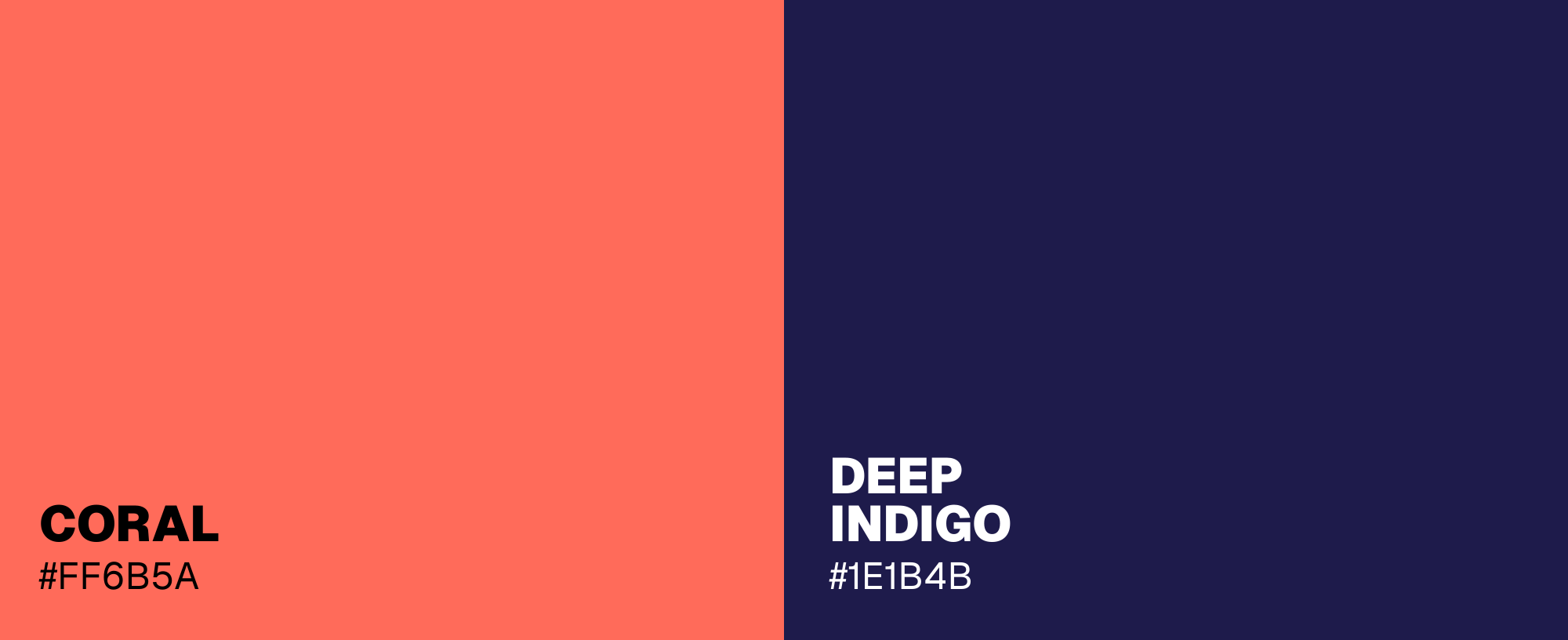
The pairing of coral (#FF6B5A) with deep indigo (#1E1B4B) exemplifies another powerful design narrative. Here, the conversation shifts entirely. Coral, with its warm sunset hue and organic energy, brings vitality and human warmth to any composition. Deep indigo, meanwhile, carries the weight of the cosmos—infinite and calming. Together, they create a dialogue between energy and contemplation.
Fresh Perspectives
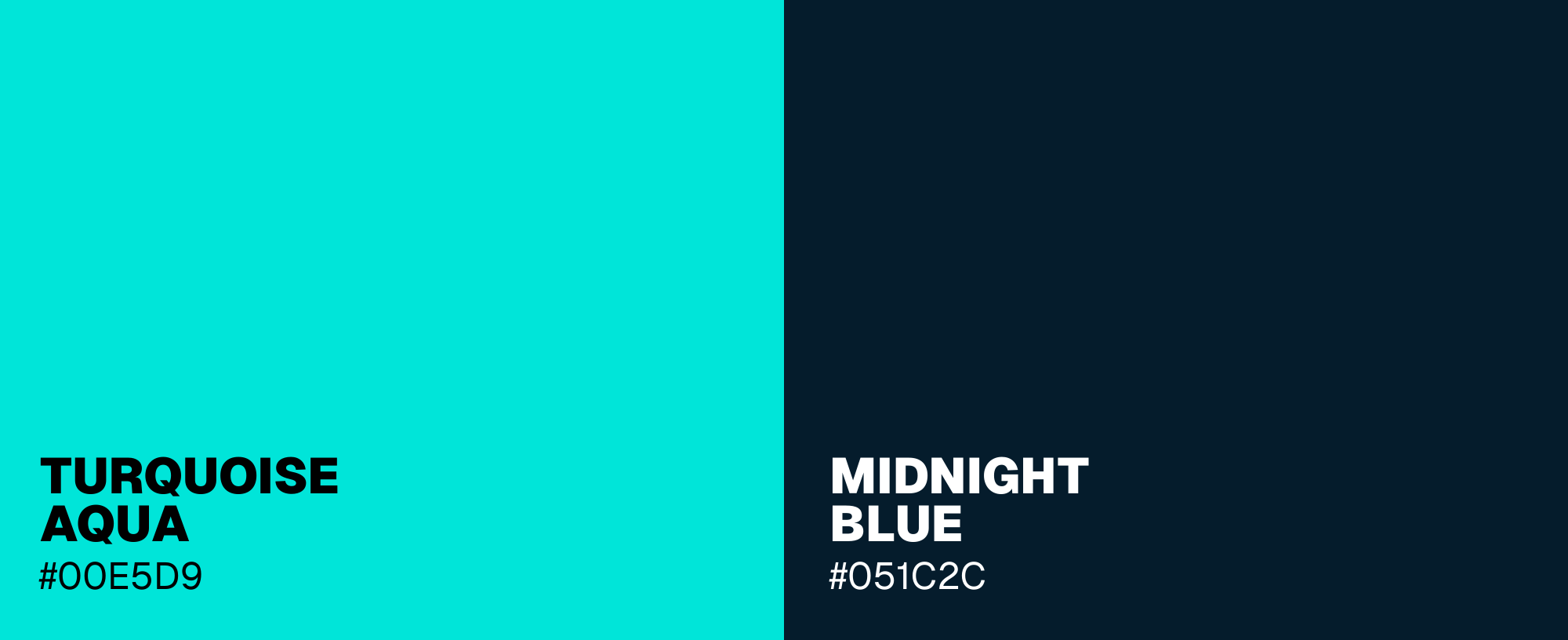
Perhaps the most striking combination is that of turquoise aqua (#00E5D9) with midnight blue (#051C2C). This pairing represents design's forward-looking spirit—digital age aesthetics meeting timeless elegance. The turquoise aqua is unmistakably contemporary, carrying associations with technology, innovation, and progress. Paired against the profound darkness of midnight blue, it doesn't scream. The popularity of blue hues throughout 2025 aligns perfectly with this aesthetic. Industry observers have noted that soft, calming, otherworldly hues have become central to creating personal and curated spaces, whether in digital design, branding, or interiors. The aqua-midnight combination pushes this further, suggesting that serenity need not mean passivity.
Building Your Own Colour Vocabulary
For designers and creators looking to develop their own distinctive colour language, several additional combinations deserve consideration. Try pairing Sage Green (#B2C9A8) with Terracotta (#C4744C) for an organic, grounded aesthetic that references the natural world whilst maintaining warmth. Alternatively, Dusty Rose (#D4A5A5) alongside Teal (#367B7D) offers a softer take on complementary contrast, speaking to both nostalgia and modernity.
For those seeking bolder statements, consider Chartreuse (#BFFF00) with Plum (#5D3754). This combination has gained significant traction as a way to create dynamic spaces that invite communication and interaction, with the acid green providing contemporary edge whilst the rich purple grounds the composition in luxury.

Gazing Into 2026
As we look towards the coming year, the colour landscape appears to be shifting once more. Industry forecasters have identified several key directions that will shape design language in 2026. WGSN and Coloro have crowned Transformative Teal—a fluid fusion of deep blue and sea green—as their Colour of the Year for 2026, positioning it as a symbol of sustainability and redirection. This choice reflects growing consumer demand for greater ecological responsibility, suggesting that colour combinations in the coming year will increasingly speak the language of environmental consciousness.
Major paint brands have already begun revealing their selections, painting a picture of what's to come. Benjamin Moore has chosen Silhouette (#AF-655), a burnt umber softened by notes of charcoal, whilst Sherwin-Williams has selected Universal Khaki, described as a warm, earthy neutral spearheading their "Tailored & Timeless" forecast. Behr's Hidden Gem presents a smoky jade with mysterious depth, and Valspar's Warm Eucalyptus embraces muted sage-green aesthetics. These selections signal a continued movement towards colours that feel grounded and restorative.
For designers crafting colour combinations in 2026, consider pairing Transformative Teal (#3F7D7A) with Warm Mahogany (#6B3A3A)—the ecological consciousness of the teal balanced by the grounded richness of mahogany. Alternatively, Universal Khaki (#B5A88F) paired with Fresh Purple (#9B5FC0), as predicted by trend forecasters, offers the stability of timeless neutrals elevated by bolder accents.
The emerging emphasis on dusty jewel tones—think grandmother's emerald ring discovered after decades in a jewellery box—paired with frosted pastels, suggests that 2026's design language will be one of nuanced sophistication. Milky lavenders, whispering blues, and silvery greens will act as refreshing alternatives to pure whites, whilst warm neutrals with pink undertones, such as Iced Copper (#C9A89A) and Gypsum Rose (#D4B5B0), will continue the evolution away from cool greys.
The most forward-thinking colour combinations for 2026 will likely embrace high-contrast, which feels both unexpected and deeply personal. As designers increasingly favour warm shades over cool ones, and applications with depth over flatness, the colour vocabulary will expand to include terms like "timeworn," "elemental," and "restorative."
The colours we choose, and more importantly how we combine them, remain one of our most powerful tools for visual communication. In 2025, designers wielded this tool with sophistication, creating visual languages that speak to our times whilst remaining timelessly elegant. As we step into 2026, those who master the art of pairing ecological teals with grounding neutrals, or vibrant jewel tones with frosted pastels, will find themselves at the forefront of visual communication—fluent in a design language that speaks not only to aesthetics, but to the deeper human need for balance, authenticity, and connection to both nature and future.