By Karen Fuller, Office Manager & Creative, Accent
I have lived through more than one technological leap in my working life. Each time, the ground shifted under an established craft, skilled people had to decide what to do next, and the work that followed looked very different from the work that came before. We are standing on another of those leaps right now, this time in our own industry of web and software development. Before I talk about what that means for Accent and our clients, I want to share what the earlier leaps taught me.
The death of a skill: from film to CTP
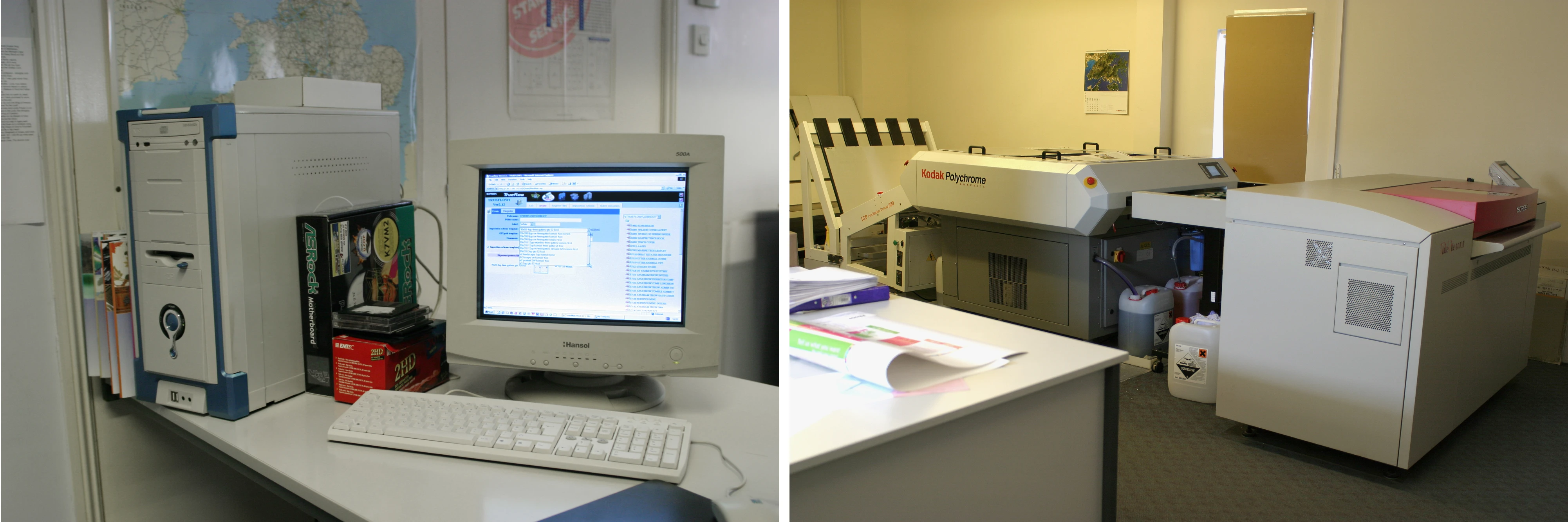
I spent my early career in printing, reprographics and design, and I was in the industry during the move from film to CTP (computer to plate).
Before CTP, imposition was a specialist trade. Experienced imposition staff arranged film by hand so that pages would land in the right place and the right order once a sheet was printed, folded and trimmed. It took years to become truly good at it.
CTP changed all of that. Suddenly someone like me could impose the pages digitally and output the plates directly, handling every step of the process from screen to press. Everything became more accurate and more efficient. Registration was better, waste fell and turnaround times shortened.
The imposition staff became plate checkers. In essence, it was the death of a skill.
What struck me even then was that this was not the first time those same people had been through it. Years before, many of them had moved from setting lead type to working with film. They had already adapted once. That is evolution: the craft does not vanish, but the shape of the job changes, and the people who thrive are the ones who carry their knowledge into the new way of working.
When the camera met the portrait painter
My background is in fine art and photography, and there is a much older story that mirrors the one I lived through in print.
For centuries, a portrait was a luxury. A sitter might pose for hours, then wait months while a master painter completed the work. Portraits were expensive and largely the preserve of the gentry and royalty.
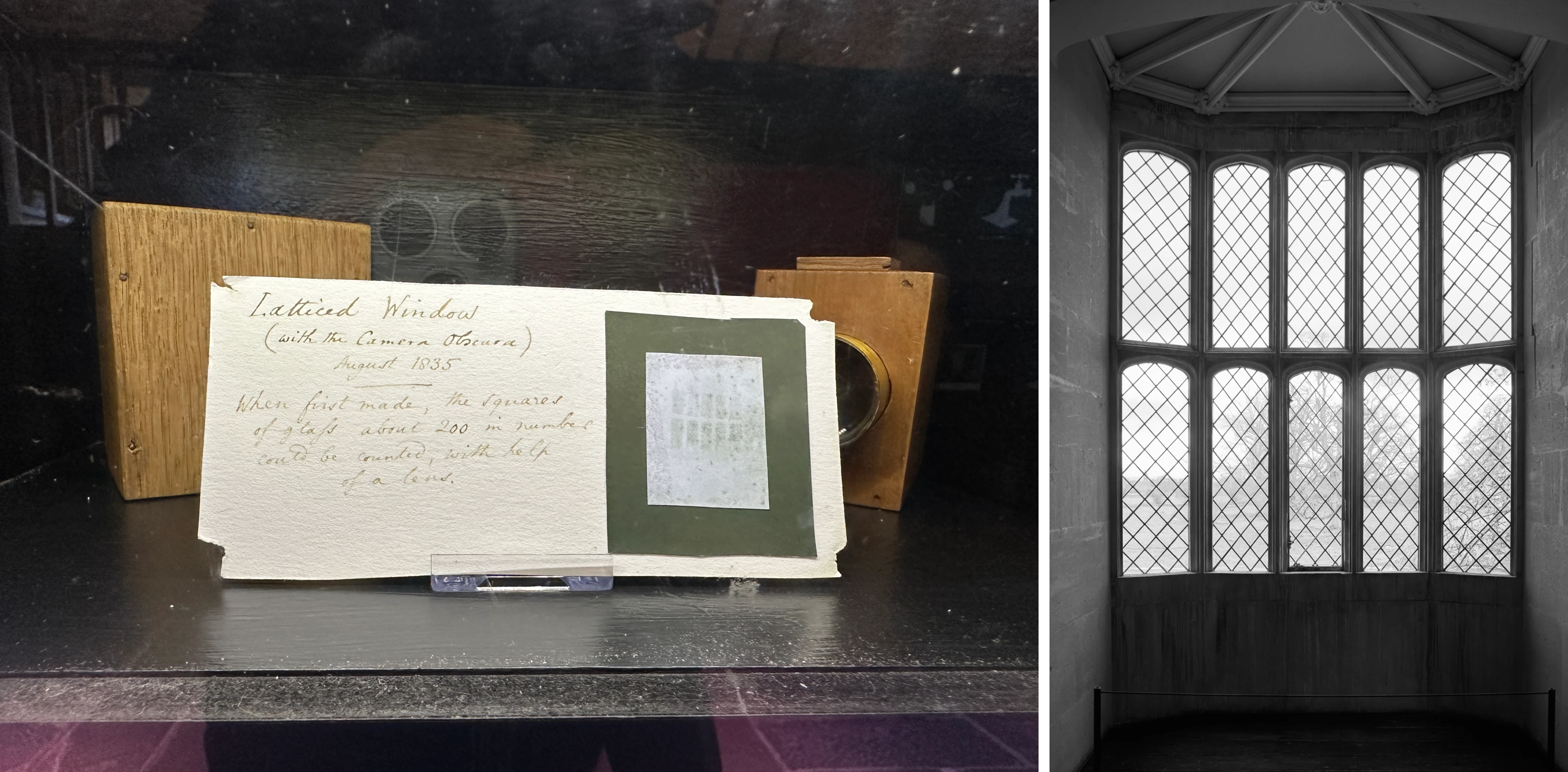
Then came photography. In Britain, William Henry Fox Talbot developed the calotype, patented in 1841. Its real breakthrough was the negative: unlike Daguerre's one-off daguerreotype, a translucent calotype negative could be used to make as many positive prints as you liked by simple contact printing. Talbot later went further still, pioneering photographic engraving so that photographs could be printed in permanent printer's ink. Image making became repeatable, and duplication became possible. As a printer, I find that connection between photography and print reproduction particularly satisfying.
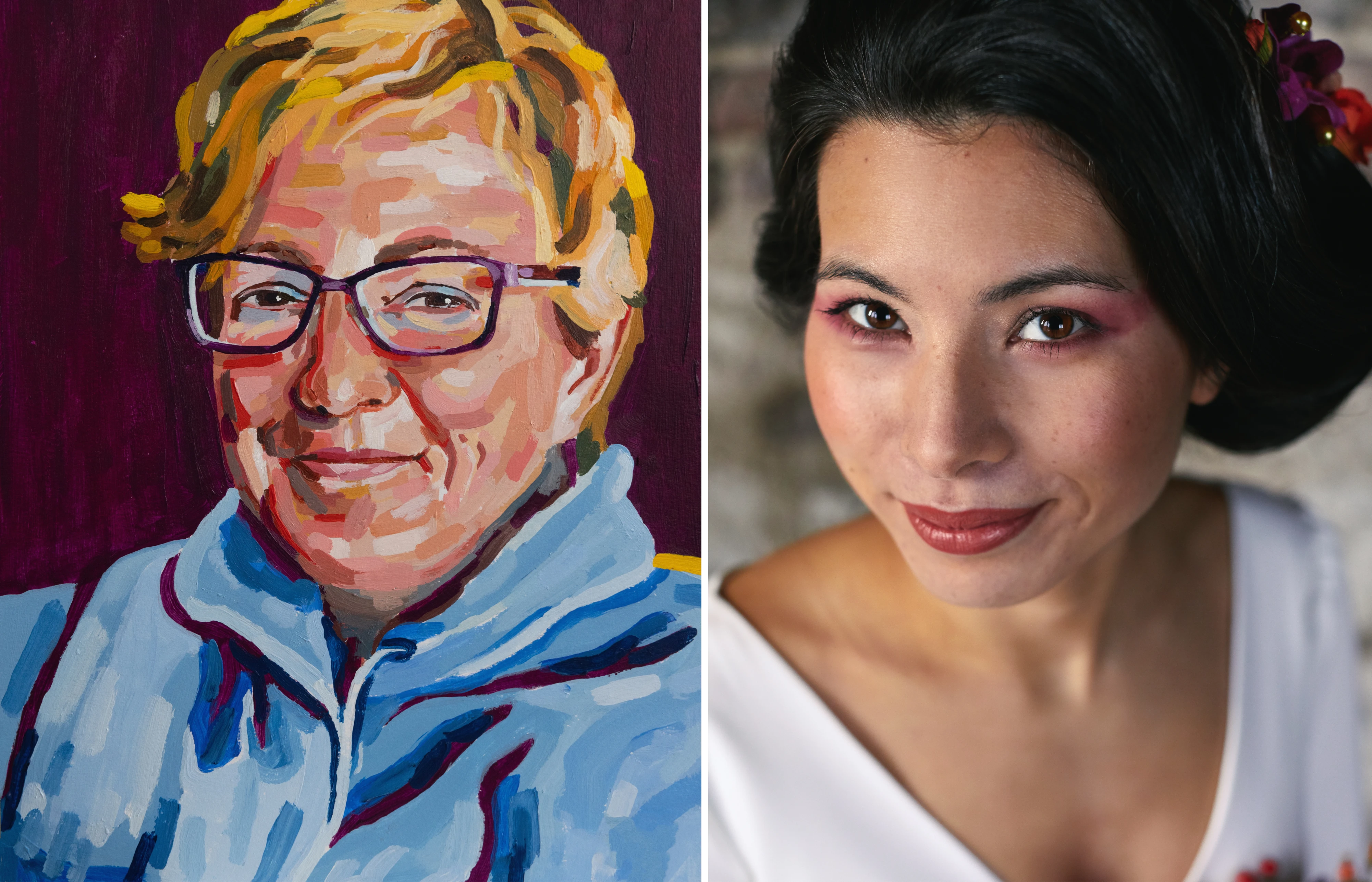
The French painter Paul Delaroche is reputed to have declared that painting was dead when he first saw a photograph. It was not, of course, but it did change. Once the camera could record a likeness faster and more cheaply, painters no longer needed to compete on literal accuracy. Many historians see this as one of the pressures that freed artists to explore light, colour, form and abstraction. Look at how Picasso experimented with cubism, breaking a subject into fragments and viewpoints that no camera could capture. The nature of the skill changed, and so did the nature of art.
Portraits, meanwhile, were democratised. Ordinary families could have their likeness taken for the first time.
Painters who became photographers
Crucially, the skills painters had spent years learning were not wasted. Posing, lighting, composition and the ability to connect with a sitter transferred directly to the new technology. Several painters made exactly that move, including Henry Peach Robinson and Gertrude Käsebier. Henry Peach Robinson (1830 to 1901) began as a painter, exhibiting an oil painting at the Royal Academy in 1852. He took up photography in the same decade and opened a portrait studio in 1857. He composed his photographs in the manner of classical paintings, became one of the leading voices for photography as a fine art, and was vice-president of the Royal Photographic Society by 1887. Gertrude Käsebier (1852 to 1934) trained as a portrait painter at the Pratt Institute in Brooklyn between 1889 and 1893. She then shifted her focus to photography, apprenticed herself to a photographic chemist and a Brooklyn portrait photographer to learn the trade, and opened her own portrait studio on Fifth Avenue in New York in 1897. Within a few years Alfred Stieglitz was calling her one of the leading portrait photographers in America. Both are associated with Pictorialism, a movement whose whole argument was that photography could be art in the same way painting was. In other words, they did not abandon their craft. They brought it with them.
My own leap: from the darkroom to digital
The next leap was one I lived through as a photographer.
During my art school years I spent a great deal of time in the analogue darkroom. I loved it, but experimentation was slow and expensive. Every test print cost paper, chemicals and time. Professional photography seemed out of reach, largely sitting in the hands of those who could afford the equipment, the studio and the film.
Around the early 2000s, digital cameras started to appear in the hands of family and friends. I bought my first digital SLR, a Canon EOS 10D, in July 2003, and I instantly loved being able to experiment in real time. I could try an idea, see the result immediately, adjust and try again, without counting the cost of every frame.
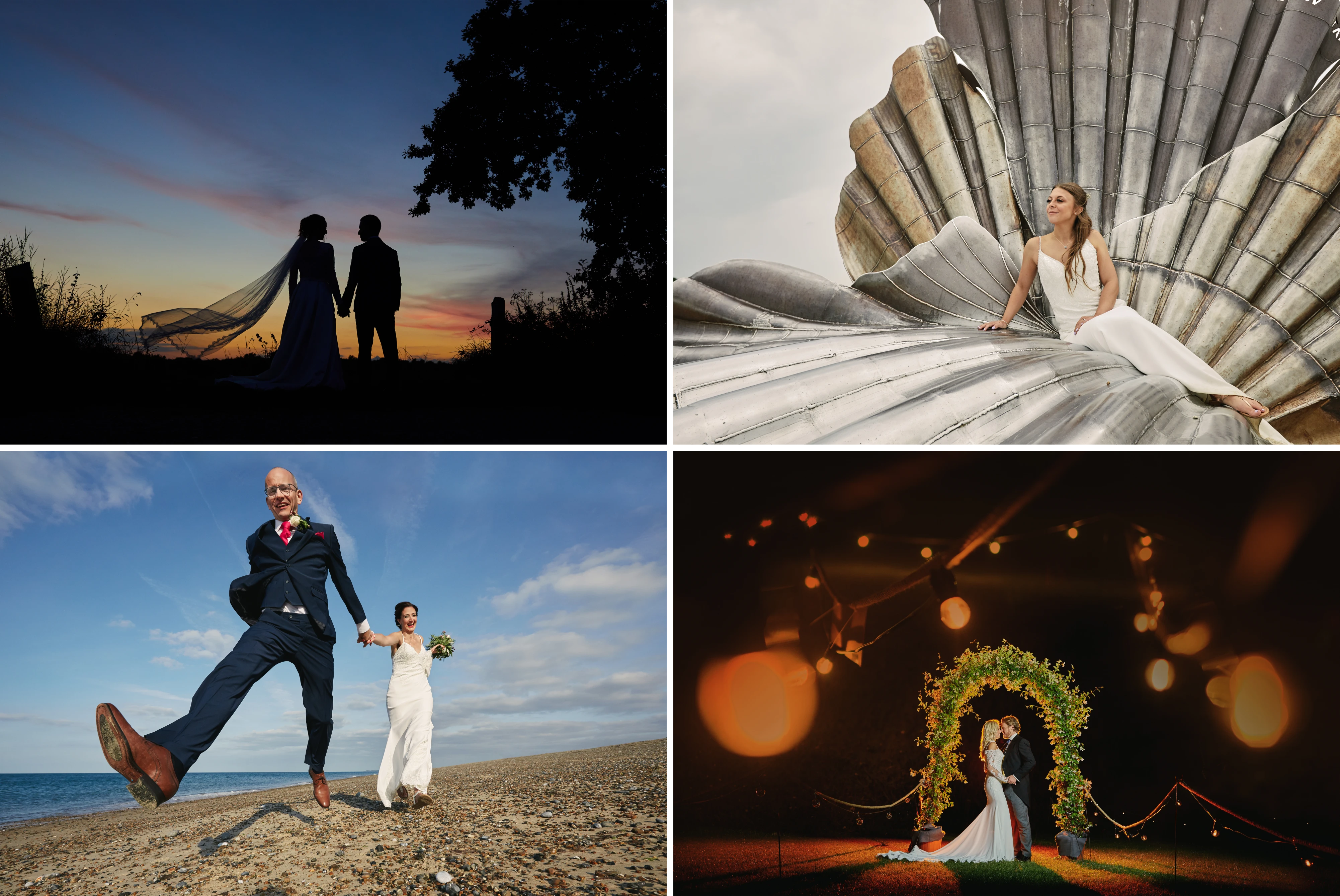
Digital democratised photography and shook up the professional industry. Those of us with computer skills began to fly. Many established analogue studio owners began to struggle. I made the leap myself, and by 2009 I was working as a self-employed, full-time photographer.
The biggest change I noticed was in attitude. We were less afraid to take risks, because risks had become cheap. Image making exploded. Then, as soon as decent lenses arrived in mobile phones, the democratisation of photography was complete. Today almost everyone carries a capable camera in their pocket.
There is a counterweight to all of this, and it would be dishonest not to mention it. When everyone can take a photograph, the perceived value of an image falls, and so can the perceived value of an experienced image maker. Yet anyone who has commissioned a professional knows the difference is still there: in the lighting, the composition, the way a good photographer puts a nervous sitter at ease. The tools were democratised. The judgement was not.
Now it is our turn: the leap in web development
Which brings me to today, and to the industry I now work in.
At the recent Rails World 2026 conference in Austin, David Heinemeier Hansson (DHH), the creator of the Ruby on Rails web framework and co-owner of 37signals, opened with a keynote that could almost have been written for this article. He walked through exactly the same history I have described: hand-painted royal portraits that took months or even years, the arrival of the camera, and the Kodak Brownie bringing photography to the masses in 1900.
There is a lovely personal twist. DHH's great-great-grandfather was the Danish painter Laurits Tuxen, who spent around three years on a portrait of the Danish royal family in the 1880s. As photography took over the job of recording reality, Tuxen and many of his contemporaries pivoted towards impressionism. Later in life, Tuxen happily sat for his own photographic portrait.
DHH then drew the parallel to software:
"On November 24th 2025 we got the Kodak Brownie of our era."
He was referring to the release of Anthropic's Claude Opus 4.5, the moment he believes AI-assisted software development became genuinely accessible to working developers. In his view, there was everything before that date, and everything after.
"Look at all the things I'm not doing"
One of the most memorable moments of the keynote was a clip from a talk DHH gave in Brazil in 2005, when Rails was new. In it, a much younger DHH enthuses about how little code Rails required:
"Look at all the things I'm not doing."
He played it to make a point: that same excitement about removing drudgery is what he feels now, multiplied many times over. He says he has barely written code by hand for months, yet has been able to fix "every dream, every annoyance" on his list.
At 37signals, the company has now gone what he called "pencils down" on writing code by hand as a normal way of working. His conclusion for the industry was blunt:
"Writing code by hand is no longer an economically productive enterprise for the vast majority of programmers working at the vast majority of companies."
That is a strong claim, and not everyone will agree with it. But anyone who has worked through a technological leap will recognise the shape of it. It is the imposition department meeting CTP. It is the portrait painter meeting the Brownie.
English as a programming language
The line that stayed with me most, as a creative rather than a coder, was this:
"There is actually a programming language I like better than Ruby... It's called English."
This is where the democratisation happens. With tools such as Claude Design and Claude Code, anyone who can describe what they want clearly can now prompt a website into existence. A designer can produce a working prototype. A business owner can sketch an app. The barrier to entry has dropped, just as it did when the digital camera arrived.
The lesson from the Swiss cheese
DHH was also honest about the pitfalls. Earlier this year, 37signals let a group of designers create features with AI for a product release. Individually, each piece of work looked reasonable. Taken together, he admitted, they left the application's architecture looking like Swiss cheese.
For me, that is the most important part of the whole talk. It is the photography story again. The tools are democratised, but judgement, experience and an understanding of how everything fits together still matter enormously. Anyone can take a photograph; not everyone can light a portrait. Anyone can prompt a website; not everyone can make it accessible, fast, secure, sustainable and built to last.
What this means for Accent
Accent was established in 1990 as a digital print and design company and began building websites in the late 1990s. We have been through the arrival of the web itself, the rise of content management systems, more than 15 years of specialist WordPress development, the shift to mobile and responsive design, and now the arrival of AI. We are still here because we have always been early adopters, and because we pivot quickly.
We are taking this leap head on. Our newer client websites are built as fast, lightweight static sites. We are experimenting, measuring and learning every week, and passing the benefits on to our clients: quicker turnarounds, more ambitious features and more time spent on the things that genuinely move a project forward.
But, like those painters who became photographers, we are bringing our craft with us. More than three decades of combined experience still decides what good looks like. AI can write code at astonishing speed; our team decides whether that code meets WCAG 2.1 AA accessibility standards, whether it performs well in Core Web Vitals, whether it is secure, whether it protects a client's search rankings during a migration, and whether it will still be maintainable in five years' time. That judgement is the value an experienced maker brings, whatever the tools.
DHH framed the change as "This is not something to look back upon with regret. This is something to look back upon with joy." I feel the same about the darkroom. I loved it, and I would not swap those years. I would not go back either.
Change is inevitable, and it can be wonderful
Every leap I have lived through has followed a similar pattern. A skill that took years to master suddenly becomes something a machine can do. There is fear, there is loss, and some people struggle. Then something remarkable happens: the cost of experimenting falls, people become less afraid of taking risks, and creativity explodes. Painting gave us impressionism, fauvism, expressionism and cubism. Digital photography gave a whole generation the freedom to try ideas without counting the cost of every frame. CTP gave printers accuracy and efficiency we could only have dreamed of.
The explosion of experimentation that these leaps bring means we are less afraid of taking risks, and that can yield some wonderful things.
Change and evolution are inevitable. As we stand on another jump in technology, yes, we need to be mindful. We need to protect quality, keep people at the heart of what we build, and value the expertise that turns raw capability into something genuinely good. But if history teaches us anything, it is that the people who carry their craft into the new world, rather than mourning the old one, are the ones who make the most extraordinary work.
We intend to be among them.
About the author
Karen Fuller is Office Manager and Creative at Accent. She has 27 years of experience across the reprographics and photography industries, holds a degree in fine art, and has qualifications and awards in photography and design. She worked through the transition from film to CTP in litho print, and ran her own full-time photography business for over a decade before joining Accent.
A Note on How This Article Was Produced
The editorial position taken here is Karen Fuller's own, drawn from more than two decades of hands-on work in print reprographics and design. AI tools were used to help summarise research and to shape the author's views into a working draft. Every claim was verified, and the final text was reviewed and edited by a person, who takes responsibility for it.